
From visual chest rise to objective metrics: how a fast-growing Iowa community of 35,000 residents replaced clinical guesswork with real-time ventilation feedback.
Delivering high-quality manual ventilation during cardiac arrest is often perceived as a basic motor skill. Yet, in the chaos of real-world resuscitation, it is one of the most difficult interventions to perform consistently. Stress, scene complexity, and a traditional reliance on subjective visual cues, like “chest rise” or tactile “feel”, often result in hyperventilation, incorrect tidal volumes, or massive mask leakage.
For the Waukee Fire Department in Iowa, a rapidly growing community of approximately 35,000 residents operating from two stations with 60 personnel, addressing this challenge was critical. All of Waukee’s line personnel are trained to the EMT or paramedic level, and they saw a major opportunity to make manual ventilation more consistent, objective, and measurable.
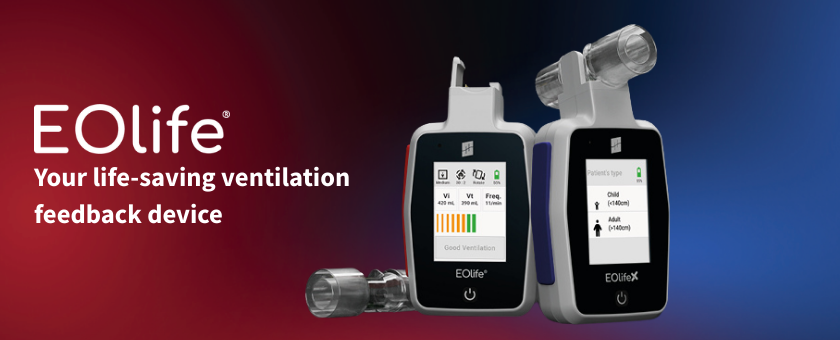
By integrating Archeon’s EOlife and EOlife X devices, Waukee Fire Department has successfully transformed how they train, communicate, and deliver life-saving ventilation in the field.
Key takeaways
- 60 personnel, 2 stations, all EMT/paramedic-trained: yet chest rise alone couldn’t guarantee consistent ventilation.
- A dual-device strategy: EOlife X for training, EOlife for frontline care, turned abstract guidelines into breath-by-breath, coachable performance.
- A new “common language” of objective data now drives coaching, teamwork, and accountability during resuscitation”.
The challenge: the invisibility of ventilation errors
Without objective measurements, even highly trained paramedics find it difficult to deliver appropriate tidal volumes consistently during a resuscitation attempt.
“We saw an opportunity to make manual ventilation more consistent and measurable,” says Tony Clemen, Division Chief of Training and EMS for the Waukee Fire Department. “It is often viewed as a basic skill, but during resuscitation it is one of the most important interventions we perform. Stress, scene complexity, and reliance on chest rise alone can lead to an inappropriate ventilation rate or volume.”
The clinical reality became glaringly obvious during demonstration sessions. The department’s first introduction to EOlife X was nothing short of “eye-opening”, especially during pediatric training scenarios.
“The device made it clear how difficult it can be to deliver an appropriate tidal volume by feel or by watching chest rise alone,” Chief Clemen explains. “Seeing low or excessive volumes, an incorrect rate, and mask leakage on the display turned an abstract discussion into measurable performance that providers could immediately adjust.”
The solution: a dual-approach to training and patient care
To bridge the gap between abstract resuscitation guidelines and hands-on clinical execution, Waukee Fire Department deployed a dual strategy, integrating EOlife X for education and the clinical EOlife device for emergency field operations.
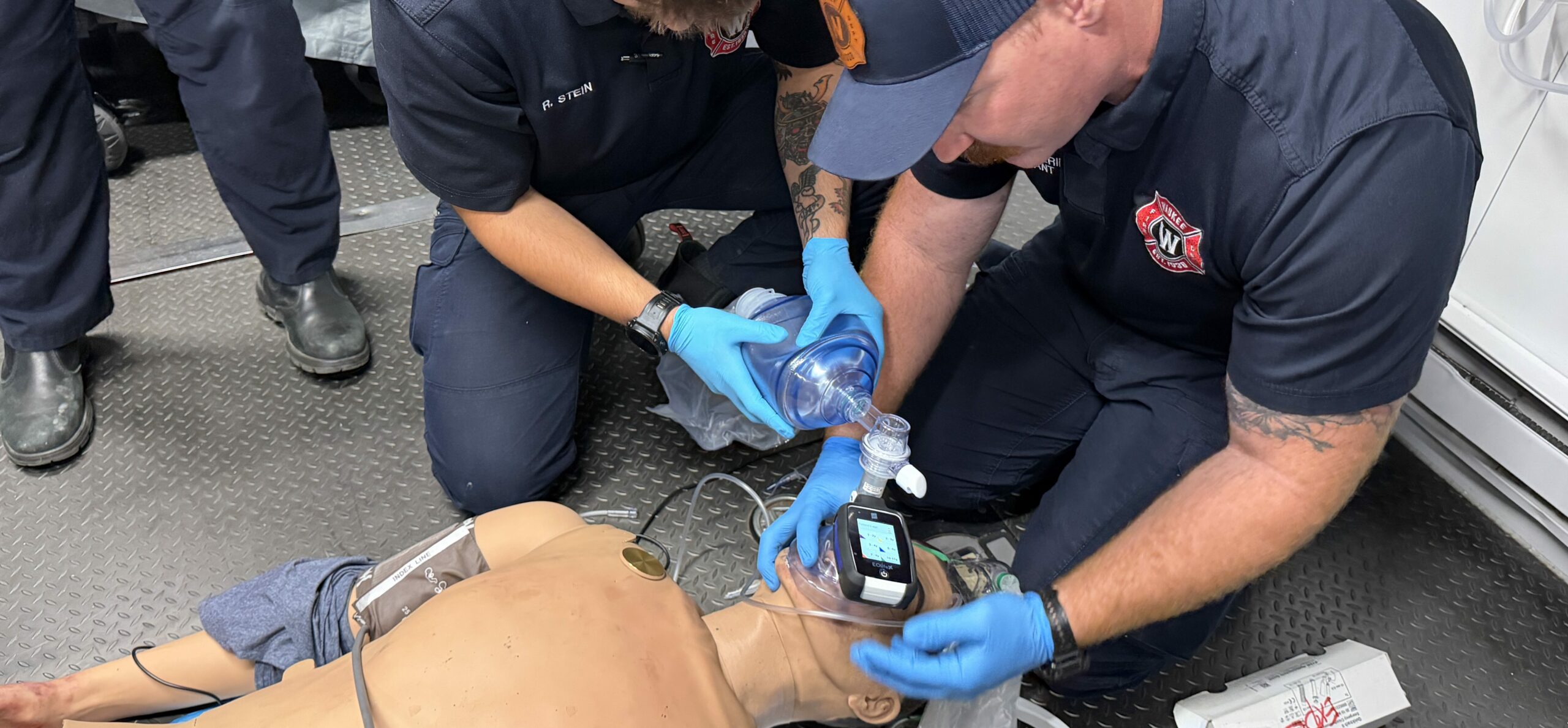
- Monitored and blind simulator training (EOlife X): Waukee integrates EOlife X into every training scenario involving manual ventilation. Using the device’s adult and pediatric selections, alongside 30:2, 15:2, and continuous ventilation modes, instructors can match simulations precisely to patient profiles. Monitored training is used for real-time coaching, while “blind” training allows instructors to record baseline data and review performance metrics afterward with the learner.
- Frontline emergency operations (EOlife): While EOlife X is reserved for high-fidelity manikins and patient simulators, the clinical EOlife device is deployed directly on emergency vehicles for frontline patient care.
The results: better seals, clearer training, and intact discharges
Since implementing the devices, Waukee Fire Department has utilized the clinical EOlife device on approximately 19 patients in the field. The impact has been profound across both training and clinical outcomes:
- Tackling mask leakage: One of the most valuable aspects of the device has been its real-time leakage detection. This feedback has demonstrated to crews just how vital a tight mask seal is, reinforcing the clinical importance of the two-person BVM technique.
- Eliminating over- and under-ventilation: Breath-by-breath estimated tidal volume and frequency feedback have allowed providers to recognize under- or over-ventilation immediately, adjusting their bag squeezes to maintain precise compliance.
Changing the culture: a “common language” of resuscitation
Beyond the metrics and clinical data, the integration of EOlife has fundamentally changed how Waukee’s emergency crews communicate.
“EOlife has changed how our crews talk about ventilation,” Chief Clemen shares. “Instead of asking only whether the chest rose, we can discuss whether the patient received an appropriate tidal volume, whether the rate was correct, and whether leakage limited effective ventilation. That common language strengthens coaching, teamwork, and accountability during one of the most important interventions we perform.”
Waukee’s blueprint for success: quality improvement over equipment purchases
For other healthcare and EMS organizations considering manual ventilation feedback devices, Chief Clemen offers vital advice: do not treat this as a simple equipment purchase. Instead, integrate it into a continuous quality improvement program.
“Do it, but make the devices part of a continuing training and quality-improvement process, not simply an equipment purchase,” Clemen advises. “Start by letting providers establish a baseline without feedback, then use monitored feedback to improve technique. Include adult and pediatric scenarios, one- and two-person BVM ventilation, and deliberate review of tidal volume, rate, and leakage. Repetition is what turns the information into reliable performance under stress.”