

At the Urgences 2025 conference, organized by the French Society for Emergency Medicine, Professor Abdo Khoury and Dr. Daniel Jost led a session entitled: “Ventilation Feedback Devices: A Tool for Improving CPR?”
Focusing on the quality of manual ventilation during cardiac arrest and its potential impact on patient outcomes, the session highlighted the growing interest in Ventilation Feedback Devices (VFDs), particularly the EOlife device.
How can we put the “P” back in CPR?
As Professor Khoury pointed out, the past few decades have seen significant advances in resuscitation: automated defibrillators, mechanical chest compression devices, improved emergency response systems… And yet, the survival rate for out-of-hospital cardiac arrest has remained below 10% for over 40 years.
One reason? Manual ventilation is often overlooked, poorly taught, and rarely monitored.
For too long, guidelines have focused on the risks associated with intubation and hyperventilation. But recent studies have shown that nearly 60% of patients are actually hypoventilated, mainly due to major leakage during insufflations.
Yet when an adequate tidal volume is delivered, the results are striking:
- Favorable neurological outcomes increase fourfold
- Survival rate increases threefold
This raises an essential question: how can we ensure effective, controlled, and appropriate ventilation in emergency situations?
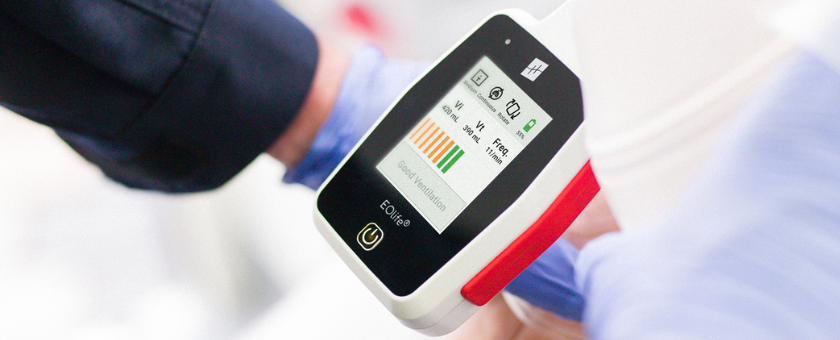
The answer may lie in VFDs like EOlife—manual ventilation monitoring devices that provide real-time feedback on the quality of each insufflation.
Professor Khoury emphasized the importance of equipping training centers with these devices to improve manual ventilation training, and of deploying them to first responders to standardize and secure the practice in the field.
EOlife with the Paris Fire Brigade: field experience feedback
Dr. Jost presented the field experience of the Paris Fire Brigade (BSPP), which conducted two successive clinical trials using the EOlife device.
During the first phase, EOlife was used in a blind mode, solely to record how ventilation was being performed under normal conditions. The results revealed a high variability in delivered volumes, significant leak rates, and a general trend toward hypoventilation.
In the second phase, EOlife’s real-time feedback was activated. The results were clear:
- Significant reduction in volume variability
- Decrease in leaks
- Near-total elimination of hyperventilation episodes
- Overall tidal volume more in line with current recommendations
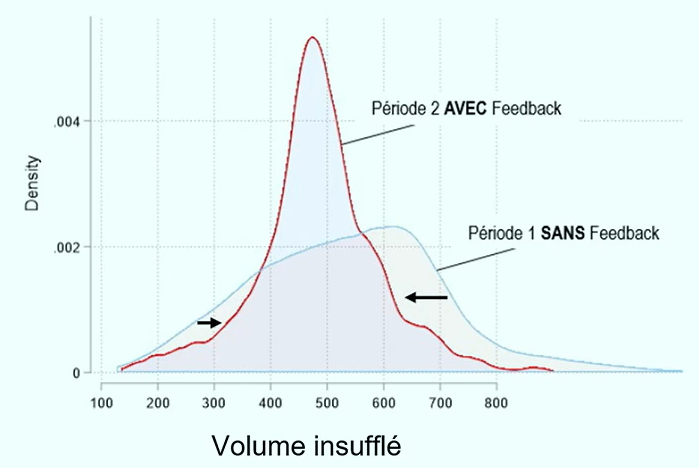
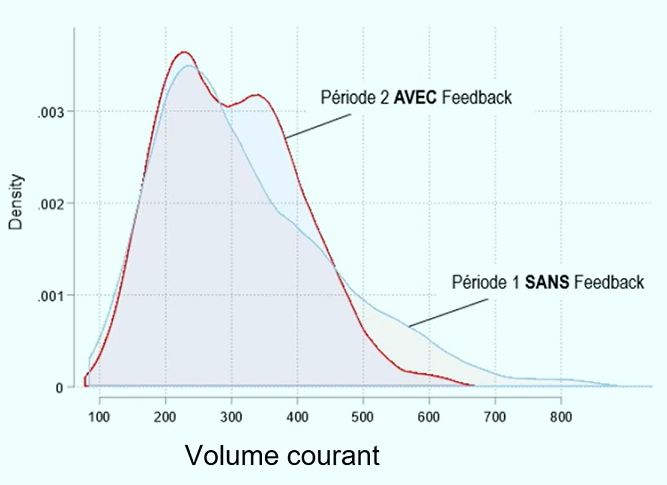
According to Dr. Jost, the use of EOlife—simple, intuitive, and well-suited to the prehospital environment—significantly improves the quality of manual ventilation without adding complexity to patient care.
Key takeaway: a paradigm shift within reach
This session highlights a genuine opportunity to improve CPR practices by enabling better-controlled and measurable ventilation through the use of VFDs.
The speakers emphasized the major potential impact of these devices on training, field practice, and ultimately, patient survival.
It is time to recognize manual ventilation monitoring—and devices like EOlife—as essential components of the chain of survival, to integrate them into training centers, and to promote their adoption among first responder teams!
Are you interested in EOlife ?
Learn more
This conference was an industry session organized by Archeon Medical during “Urgences 2025” congress.