

First real-world study shows EOlife associated with a threefold increase in survival with good neurological outcomes
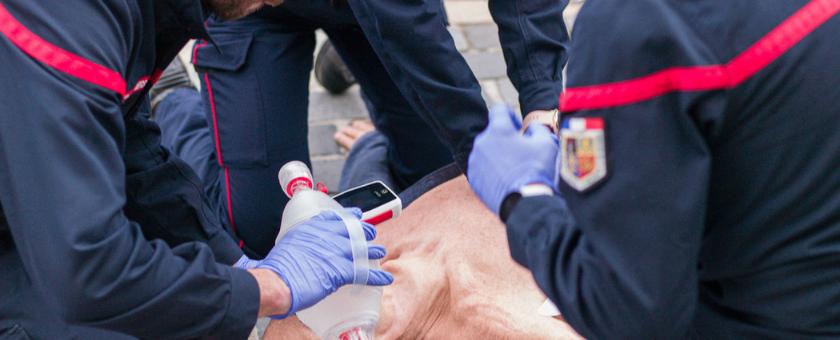
A recent retrospective analysis conducted by a team from Louis-Pasteur University (France) investigated the impact of implementing the EOlife Ventilation Feedback Device (VFD) within a French firefighter service. This study revealed that patients ventilated with EOlife had a threefold higher survival rate with good neurological outcomes compared to those who were not ventilated with the device.
One of the first firefighter department globally fully equipped with EOlife
The Doubs Firefighter Department (SDIS 25), located in France, is a fire and rescue service highly engaged in prehospital care.
Since 2022, this firefighter department has followed a stepwise approach to equip all its emergency units with ventilation feedback devices. As of 2024, every fire station is now equipped with an EOlife X training device, and every ambulance is equipped with an EOlife clinical device, making SDIS 25 the first firefighter service globally to achieve full deployment of the EOlife solution.
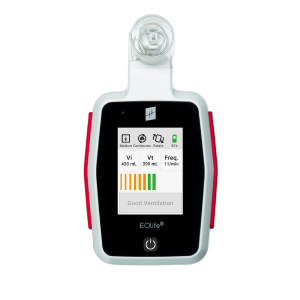
EOlife, the only Ventilation Feedback Device (VFD) to display the volume of gas reaching the patient’s lungs (Tidal Volume).
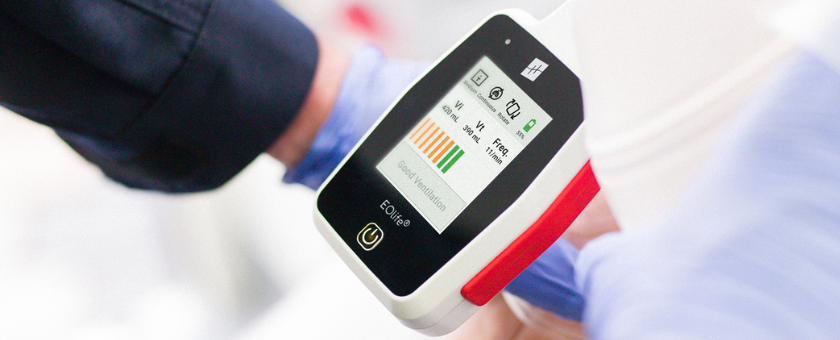
CE-marked and FDA-cleared medical device enabling real-time measurement of insufflated volume, tidal volume, and ventilation frequency. It provides visual feedback to deliver ventilation following ERC or AHA recommendations.
A real-world study conducted by Louis-Pasteur University
A Louis-Pasteur university research team retrospectively analyzed the outcomes of 166 out-of-hospital cardiac arrest (OHCA) patients jointly treated by SDIS 25 and Besançon hospital in 2024. Patients were divided into two groups:
-
- Group 1: 48 patients manually ventilated using the EOlife device
- Group 2: 118 patients who did not benefited from the EOlife device
Both groups were similar in terms of age, sex, and etiology. The primary outcomes were 1-day and 30-day survival, as well as neurological outcomes measured using the Cerebral Performance Category (CPC) score. In addition, the number of electrical shocks delivered (for shockable rhythms) was analyzed.
Significant association between EOlife use and improved survival with good neurological outcomes
Results demonstrated a strong positive signal in favor of EOlife use during cardiac arrest resuscitation:
-
- 30-day survival: 10.4% (Group 1) vs. 4,24% (Group 2, p = 0.077)
-
- Survival with good neurological outcome (CPC 1): 10.4% (Group 1) vs. 3,39% (Group 2, p = 0.046)
Importantly, all patients in Group 1 who survived at 30 days had good neurological outcomes, which was not the case in Group 2.
Additionally, patients ventilated with EOlife required fewer defibrillation shocks than those ventilated without the device.
Study strengths and limitations
The main strength of this study is its real-world design: no specific research protocol was implemented beforehand, and participants were unaware they were contributing to a study. This allowed for an authentic evaluation of the EOlife device in everyday field conditions.
The main limitation is the sample size, which remains modest. However, despite the limited number of patients, the difference in neurological outcomes reached statistical significance, highlighting the strength of the data.
A strong signal supporting wider implementation of EOlife
This real-world analysis shows a significant association between the use of EOlife and improved survival with favorable neurological outcomes.
While the latest European Resuscitation Council (ERC) Guidelines emphasize that Ventilation Feedback Devices (VFDs) should be deployed within a controlled and standardized framework — including regular user training and data analysis — this study illustrates the considerable impact that proper implementation can achieve in real emergency conditions.
This analysis supports two key objectives:
-
- Serving as a pilot study for larger-scale clinical trials assessing the direct impact of VFDs on patient outcomes.
-
- Acting as an example of successful device implementation, demonstrating measurable improvements in both survival rates and neurological outcomes.
Conclusion
This real-world evidence provides a compelling argument for the wider adoption and standardization of Ventilation Feedback Devices like EOlife.
Ensuring that all resuscitation teams have access to such technology could help give every cardiac arrest patient a significantly enhanced chance of survival — with good neurological recovery.
Are you interested in EOlife to improve your ventilation quality ?
Learn more
Reference
Da Cunha, Marie. (2025). Use of a manual ventilation assistance device for the management of out-of-hospital cardiac arrest by firefighters in Doubs, a real-world study. DOI:10.13140/RG.2.2.25073.54884